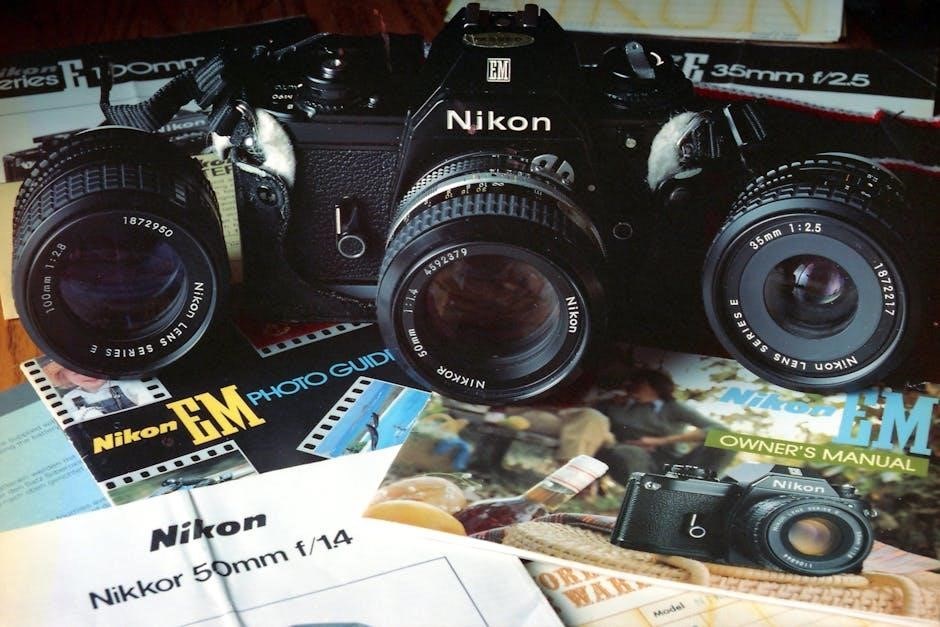
Nikon N80: A Comprehensive Guide
Original Nikon N80/N80QD instruction manuals, in English, are available; the TC-80N data provides essential guidance for optimal camera operation․
The Nikon N80, a popular film SLR, offers a blend of advanced features and user-friendly operation․ Understanding its capabilities requires referencing the original Nikon N80/N80QD instruction manual, available in English․ This guide details everything from basic controls to advanced functions like multiple exposures․ Compatibility extends across various Nikon lenses, as documented in comprehensive lens compatibility charts․
The N80 is designed for use with Nikon SLR series cameras, including models like the F-5, F-4, F100, and F70D/N70․ Proper operation and accessing features like WhatsApp Web (though unrelated to the camera itself!) require familiarity with the camera’s specific settings, all explained within the manual․
Key Features and Specifications
The Nikon N80 boasts a 35mm film format, multiple autofocus points, and a range of exposure modes—Aperture Priority, Shutter Priority, Program, and Manual․ The instruction manual details these, alongside features like depth of field preview and a self-timer․ It’s compatible with Nikon Speedlights, offering versatile flash photography options, including High-Speed Sync (HSS)․
Understanding the N80’s specifications, like its film loading/unloading procedures and error message solutions (found in the manual), is crucial․ While seemingly unrelated, accessing features like WhatsApp Web requires similar attention to detail․ The TC-80N data sheet supplements the manual’s information․

Understanding the Camera Body
The Nikon N80 instruction manual thoroughly explains body controls, layout, and viewfinder settings, ensuring users grasp the camera’s physical aspects effectively․
N80 Body Controls and Layout
The Nikon N80’s body features intuitive controls, detailed within its instruction manual․ Key elements include the mode dial, shutter speed and aperture controls, and the autofocus selection buttons․ The manual meticulously illustrates the placement of each control, alongside explanations of their functions․ Understanding the layout is crucial for efficient operation․
The top panel houses essential settings, while the rear panel provides access to film advance, rewind, and exposure compensation․ The manual emphasizes the importance of familiarizing oneself with these controls for seamless shooting․ It also details the function of the built-in flash and its associated settings, ensuring users can master both automatic and manual flash photography․
Viewfinder Information and Settings
The Nikon N80’s viewfinder provides crucial shooting information, thoroughly explained in the instruction manual․ Users can view focus points, exposure settings, and frame coverage․ The manual details how to adjust diopter correction for optimal viewing clarity, ensuring sharp focus confirmation․
It also clarifies the meaning of the various indicators displayed within the viewfinder, such as exposure compensation warnings and autofocus confirmation․ Understanding these settings is vital for precise image capture․ The manual guides users through customizing viewfinder brightness and utilizing grid lines for composition, enhancing overall shooting accuracy and control․
Film Loading and Unloading Procedures
The Nikon N80 instruction manual provides detailed steps for correct film loading and unloading, crucial for preventing damage․ It illustrates opening the camera back, inserting the film canister, and threading the film leader onto the take-up spool․
The manual emphasizes the importance of advancing the film and checking that it’s properly engaged before closing the back․ Detailed diagrams show the rewind process, ensuring safe film retrieval․ Proper technique, as outlined, avoids light leaks and film jams, preserving your photographs․ Following these procedures guarantees optimal film handling․

Exposure Settings and Modes
The Nikon N80 manual details Aperture Priority, Shutter Priority, Program, and Manual modes, offering full creative control over photographic exposure settings․
Aperture Priority Mode (A)
In Aperture Priority (A) mode on the Nikon N80, the photographer selects the desired aperture (f-stop), controlling depth of field, while the camera automatically determines the appropriate shutter speed for correct exposure․ This mode is ideal for situations where depth of field is a critical creative element – for example, achieving a shallow depth of field for portraits with blurred backgrounds, or a large depth of field for landscapes where sharpness throughout the scene is desired․
The camera’s metering system evaluates the scene’s brightness and sets the shutter speed to achieve proper exposure based on the chosen aperture․ Reviewing the N80’s instruction manual clarifies how to adjust aperture and understand the relationship between aperture, shutter speed, and exposure․
Shutter Priority Mode (S)
Shutter Priority (S) mode on the Nikon N80 allows photographers to manually set the shutter speed, controlling motion blur and freezing action, while the camera automatically adjusts the aperture for proper exposure․ This mode excels in dynamic situations like sports or wildlife photography, where capturing a fast-moving subject without blur is paramount․ Conversely, a slower shutter speed can creatively convey motion, like flowing water․
The camera’s metering system calculates the appropriate aperture based on the selected shutter speed and scene brightness․ Consulting the N80’s instruction manual will detail how to adjust shutter speed and understand its impact on exposure and image quality․
Program Mode (P)
Program (P) mode on the Nikon N80 offers a balanced approach, letting the camera automatically select both shutter speed and aperture for optimal exposure․ However, unlike fully automatic modes, Program mode allows for exposure compensation – adjusting the overall brightness of the image without altering shutter speed or aperture directly․ This is useful for scenes with challenging lighting or when a specific creative look is desired․
The N80’s instruction manual details how to utilize Program mode effectively, including how to shift the program and fine-tune exposure․ It’s a versatile mode for everyday photography․
Manual Mode (M)
Manual (M) mode on the Nikon N80 grants the photographer complete control over both aperture and shutter speed, demanding a thorough understanding of exposure principles․ The camera’s instruction manual emphasizes the importance of using the built-in light meter to achieve correct exposure in this mode․ It details how to independently adjust each setting, allowing for precise creative control․
Manual mode is ideal for challenging lighting situations or when a specific aesthetic is desired, bypassing the camera’s automatic settings․ Mastering this mode unlocks the N80’s full potential․

Focusing System
The Nikon N80’s autofocus system offers varied modes and area selections, detailed in the instruction manual, for sharp images in diverse shooting scenarios․
Autofocus Modes and Selection
The Nikon N80 provides a selection of autofocus (AF) modes, crucial for capturing sharp images in various conditions․ The instruction manual details these options, including Single Servo AF (AF-S) for stationary subjects, and Continuous Servo AF (AF-C) ideal for tracking moving objects․ AF-A, an automatic mode, intelligently switches between S and C based on subject movement․
Selecting the appropriate AF mode is vital; the manual explains how to choose based on your photographic intent․ Understanding these modes allows photographers to optimize focus accuracy and responsiveness, ensuring consistently sharp results․ Proper mode selection, guided by the manual, unlocks the N80’s full focusing potential․
Focus Area Modes
The Nikon N80’s instruction manual outlines several focus area modes, offering control over where the camera prioritizes focus․ Dynamic-area AF utilizes five focus points, allowing tracking of moving subjects within a defined area․ Closest-subject priority AF automatically selects the nearest object within the frame, useful for macro or scenes with varying depths․
Center-weighted AF prioritizes the central focus point, while single-point AF allows precise selection of a single focus area; The manual details how to switch between these modes, tailoring the focusing system to specific shooting scenarios․ Mastering these options enhances control and precision, resulting in sharper, more impactful images․
Manual Focus Operation
The Nikon N80 instruction manual details a straightforward manual focus process․ Switching to MF mode on the camera body disengages the autofocus system, granting full control over lens focusing․ The focusing ring on the lens is then rotated until the desired subject appears sharp within the viewfinder․
Split-image and microprism rings within the viewfinder aid precise focusing, particularly useful in low light or challenging conditions․ The manual emphasizes careful observation and fine adjustments for optimal sharpness․ Manual focus offers creative control and is essential when autofocus struggles or for specific artistic effects․

Flash Photography
Nikon N80 instruction manuals specify compatibility with Nikon Speedlights, including models for F-5, F-4, F100, and F90 series cameras, for versatile lighting․
Compatible Nikon Speedlights
The Nikon N80’s flash capabilities are significantly enhanced when paired with compatible Nikon Speedlights․ Documentation indicates specific models function optimally with this camera body, ensuring reliable synchronization and feature access․ These include Speedlights designed for higher-end Nikon SLR models like the F-5, F-4, F100, and various iterations of the F90 series (N90S/N90/N80), as well as the F70D/N70․
Consulting the N80’s instruction manual is crucial for verifying full compatibility and understanding any limitations with particular Speedlight units․ Proper flash operation relies on correct settings and a secure connection, maximizing photographic potential․
Flash Modes and Settings
The Nikon N80 offers a versatile range of flash modes, detailed within its instruction manual․ These encompass standard options like TTL (Through-The-Lens) flash, allowing the camera to automatically calculate optimal exposure․ Manual flash control provides full creative command over light output․ Front-curtain and rear-curtain sync options alter the timing of the flash relative to the shutter, impacting motion depiction․
Understanding these settings, alongside compatible Speedlight features, is vital․ The manual clarifies how to adjust flash compensation and lock flash exposure for consistent results․ Proper configuration ensures balanced illumination and artistic control․
High-Speed Sync (HSS)
The Nikon N80’s instruction manual details High-Speed Sync (HSS) functionality when paired with compatible Nikon Speedlights․ HSS enables flash synchronization at shutter speeds faster than the camera’s standard flash sync speed, typically 1/250th of a second․ This is crucial for achieving proper exposure and freezing motion in bright conditions while maintaining a shallow depth of field․
The manual explains how to activate HSS within the camera’s settings and on the Speedlight itself․ It also clarifies limitations and potential impacts on flash range․ Mastering HSS expands creative possibilities for outdoor portraits and action photography․

Advanced Features
The Nikon N80 instruction manual covers depth of field preview, multiple exposure functions, and self-timer/remote control options for enhanced photographic control․
Depth of Field Preview
The Nikon N80’s depth of field preview function allows photographers to visually assess the extent of focus before capturing an image․ By pressing and holding the depth of field preview button, the lens aperture stops down to the selected shooting aperture․ This simulates the final image’s depth of field, enabling precise control over which elements appear sharp and which are blurred․
This feature is particularly useful for landscape and macro photography, where accurate depth of field is crucial․ The instruction manual details how to effectively utilize this function, ensuring optimal results and creative control over image sharpness․ Remember to release the button to return to the maximum aperture for brighter viewing through the viewfinder․
Multiple Exposure Function
The Nikon N80 offers a multiple exposure function, enabling the blending of several images into a single frame․ This creative tool, detailed within the instruction manual, allows photographers to achieve surreal and artistic effects․ The camera provides options for selecting the number of exposures and blending modes, offering flexibility in achieving desired results․
To utilize this feature, the camera must be set to the multiple exposure mode, and each subsequent exposure is captured after the previous one is recorded on the film․ Careful consideration of exposure values is crucial to avoid over or underexposure of the final image․ Experimentation is key to mastering this unique capability․
Self-Timer and Remote Control
The Nikon N80’s instruction manual details its self-timer function, offering a 10-second delay for capturing images with the photographer included in the scene․ This feature is ideal for group portraits or situations where camera shake needs to be minimized․ Additionally, the N80 supports a remote control, providing greater flexibility and convenience for triggering the shutter․
Using the remote control allows for precise timing and eliminates the need to physically press the shutter button, further reducing camera movement․ The manual explains the proper connection and operation of compatible remote control units, enhancing the photographer’s control over image capture․
Troubleshooting Common Issues
The Nikon N80 instruction manual addresses error messages and solutions, alongside detailed battery information and replacement guidance for continued camera functionality․
Error Messages and Solutions
The Nikon N80’s LCD will display error messages indicating potential issues․ Understanding these codes, detailed within the instruction manual, is crucial for swift resolution․ Common errors relate to film loading, battery levels, or shutter malfunctions․ The manual provides step-by-step troubleshooting for each, guiding users through checks like ensuring correct film insertion, replacing batteries, or resetting the camera․
If an error persists, the manual advises consulting Nikon support or a qualified repair technician․ Ignoring error messages can lead to further damage, so prompt attention is vital for maintaining the camera’s functionality and longevity․ Always refer to the official documentation for accurate diagnostic procedures․
Battery Information and Replacement
The Nikon N80 utilizes standard batteries, as detailed in the instruction manual, to power its functions․ The manual specifies the correct battery type – typically AA batteries – and quantity required․ It also outlines proper battery insertion polarity to prevent damage․ Low battery levels are indicated by a warning symbol in the viewfinder․
For replacement, the manual recommends using fresh, high-quality batteries for optimal performance․ Avoid mixing old and new batteries․ Proper battery disposal, following local regulations, is also emphasized to protect the environment․ Regular battery checks ensure uninterrupted shooting during important moments․

Nikon N80 and Lens Compatibility

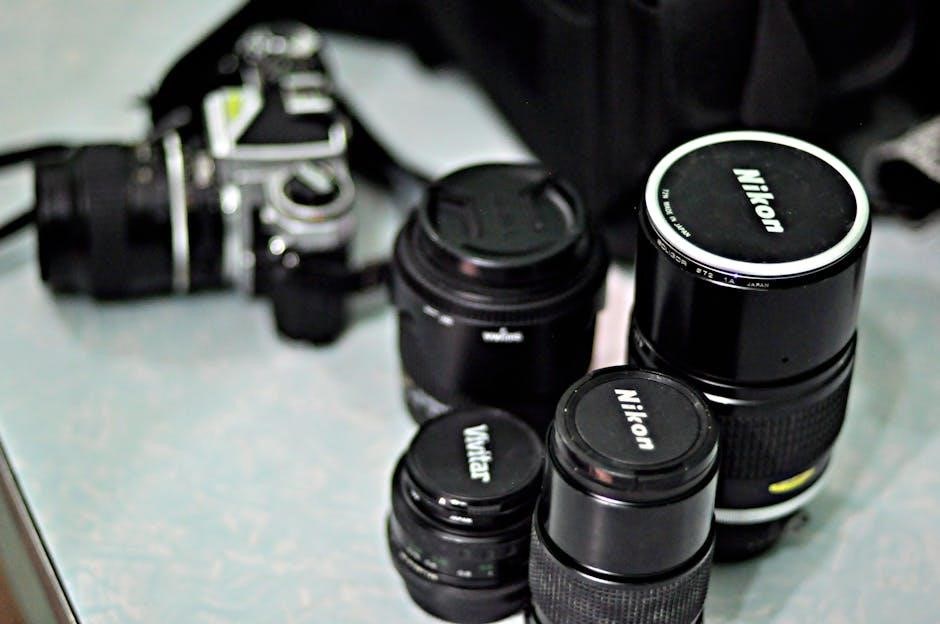
The Nikon N80, as outlined in its instruction manual, demonstrates broad compatibility with Nikon’s F-mount lenses․ This includes both older AI and AI-S lenses, as well as newer AF-I, AF-S, and AF-D lenses․ The manual details any limitations with specific lens types, such as potential functionality restrictions with older non-CPU lenses․
Compatibility documentation shows which lenses are fully functional across various Nikon film SLR bodies over time․ The N80 generally supports autofocus with AF lenses, but manual operation may be required for older models․ Refer to the manual for a comprehensive lens compatibility chart․